Whole Pig Over Live Fire
Roasting a whole pig is a different kind of process. Instead of working with individual cuts, we prepare and cook the entire animal as one. At Asado Life, a whole pig is a half-day process at minimum, and it begins long before the pig reaches the fire.
Building the Cook
The process starts the night before the event. The pig is brined overnight with salt and aromatics, allowing the seasoning to work its way into the meat while it rests.
At sunrise, the pig is rinsed and brought to the fire.
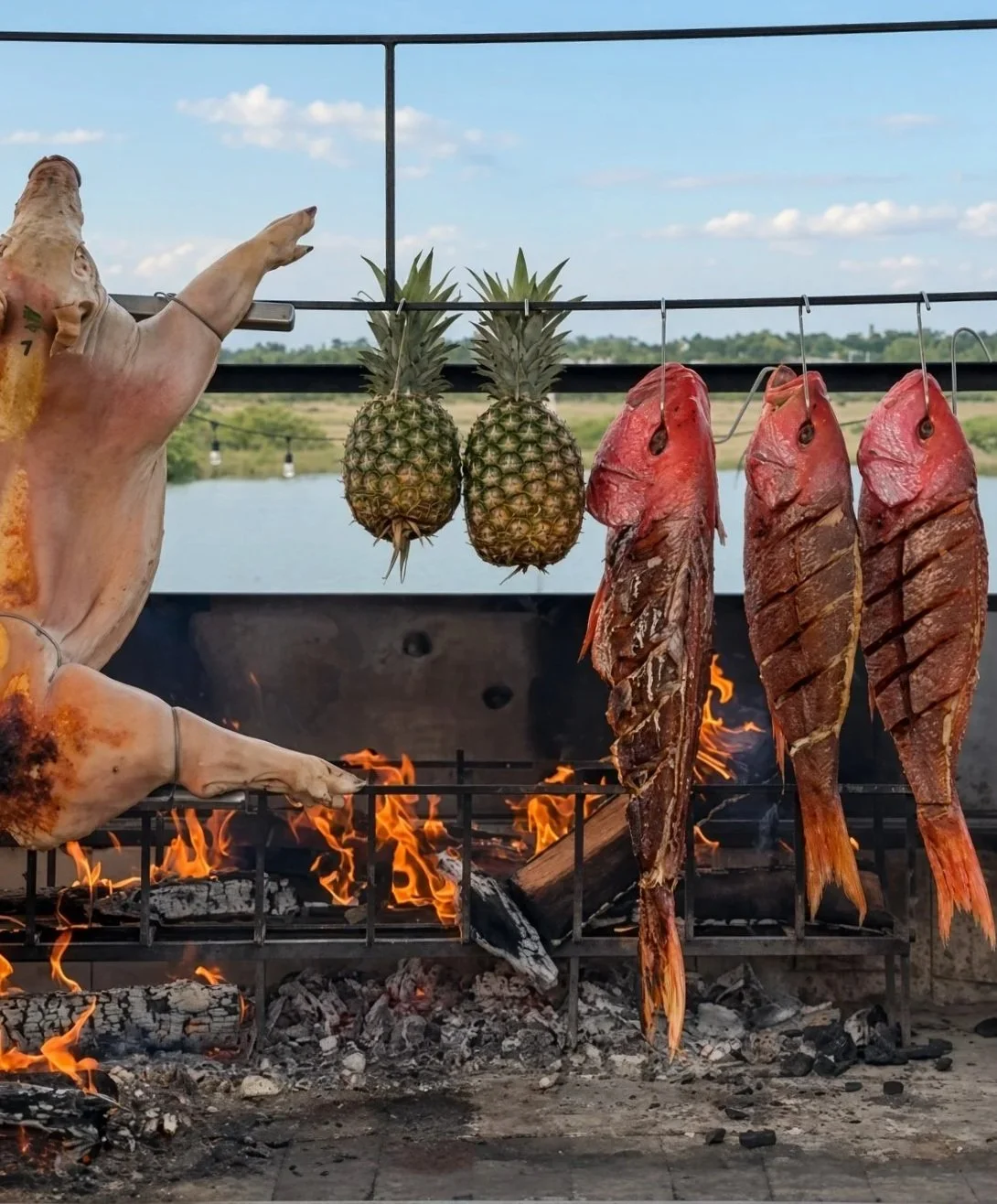
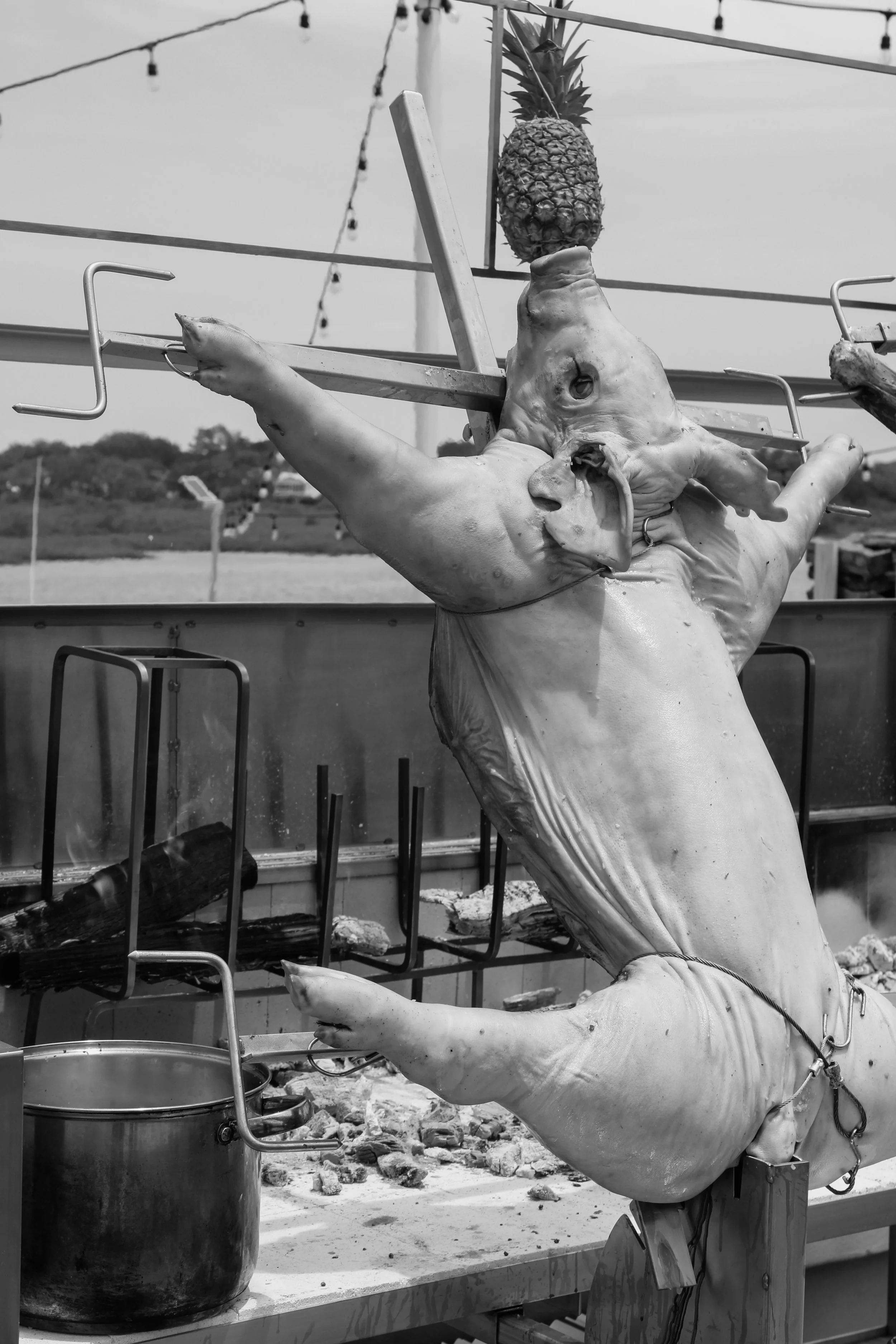
It is then positioned on a custom-built Urban Asado cross over an open fire. The design of the cross allows the asador to move the pig closer to or farther from the fire as the cook progresses, helping control the heat throughout the day.
The goal isn't simply to create intense heat. It's to build a steady cooking environment that allows the meat to render slowly while the skin develops into a crisp, deeply browned exterior.
Crisp Skin, Tender Meat
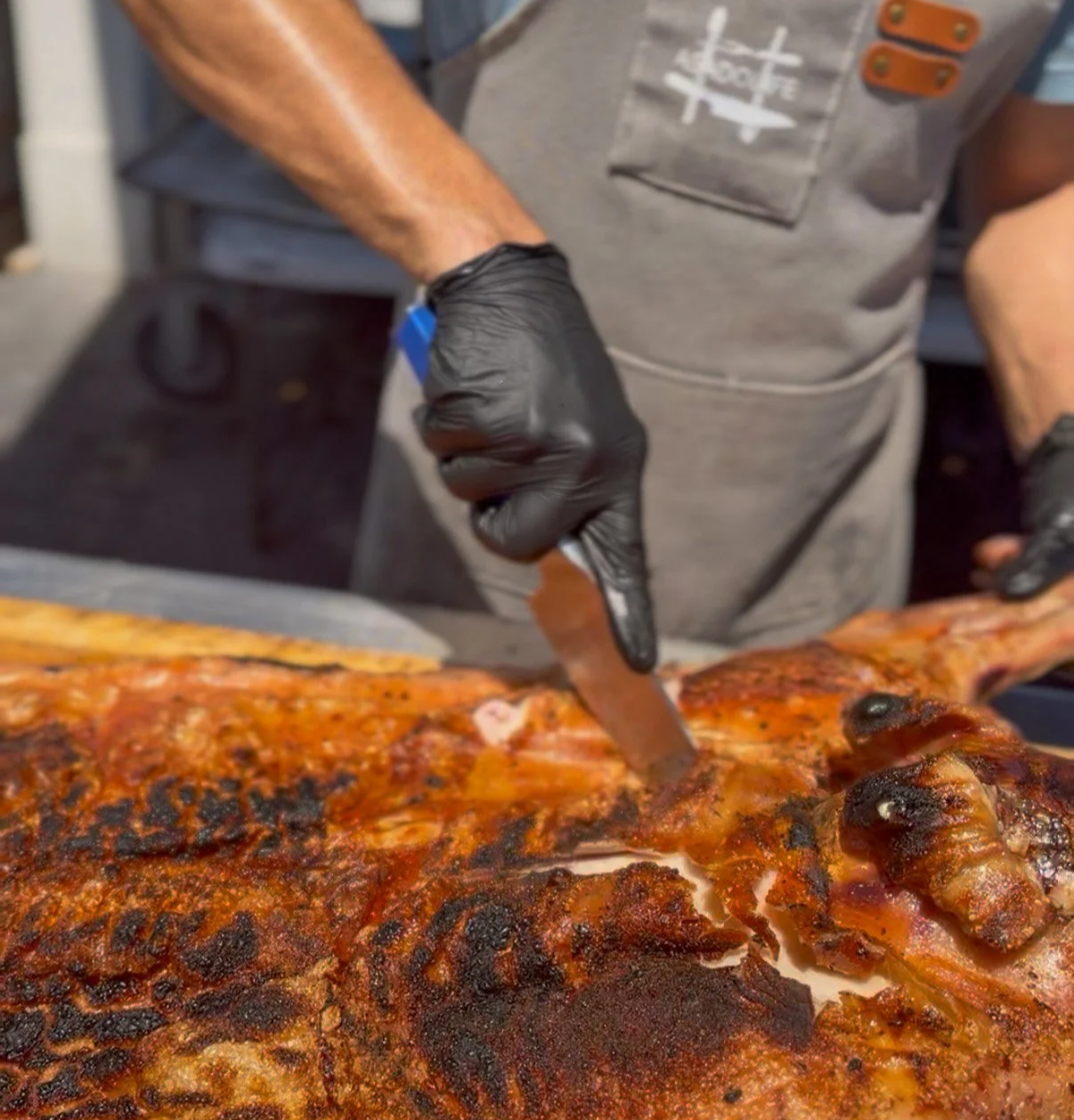
One of the defining parts of a whole-pig roast is the contrast between the exterior and the meat underneath.
As the pig cooks, the fat beneath the skin gradually renders, helping the skin become crisp while keeping the meat underneath tender and flavorful. At the same time, the connective tissue has hours to break down, allowing the meat to soften and the natural juices to stay within the roast.
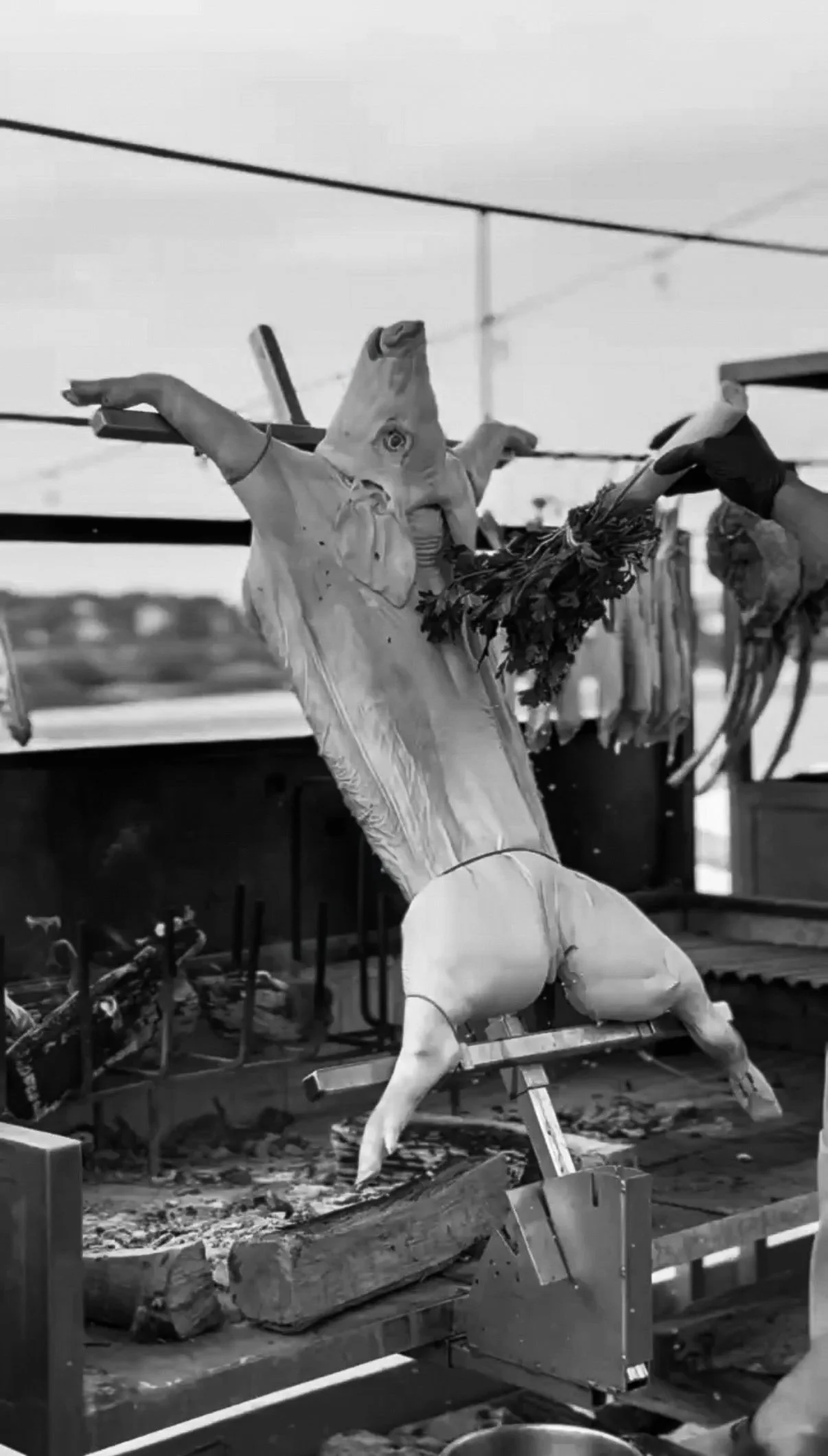
Throughout the cook, the pig is basted with handmade herb brushes. Parsley, thyme, and green onions are wrapped together in twine to create the brushes, which are dipped into a mixture of chiles, salt, water, and lime before being worked over the pig from the first hour to the last.
It's a small detail, but one that adds another layer to the cooking process.
Patience Is Part of the Process
There is no rushing a whole-pig roast.
This is a cook that takes hours, and no two are the same. Wind, sun, and weather all change the way the fire behaves, so the chef stays with the fire throughout the day, reading the conditions and tending the coals as the pig cooks.
Rather than relying solely on a timer, the color, texture, temperature, and condition of the meat help determine how the cook is progressing. The pig may need to be moved closer to the fire, pulled farther away, or adjusted on the cross depending on how the fire and meat are responding.
The fire is part of the process, and patience is part of the craft.
Made for the Table
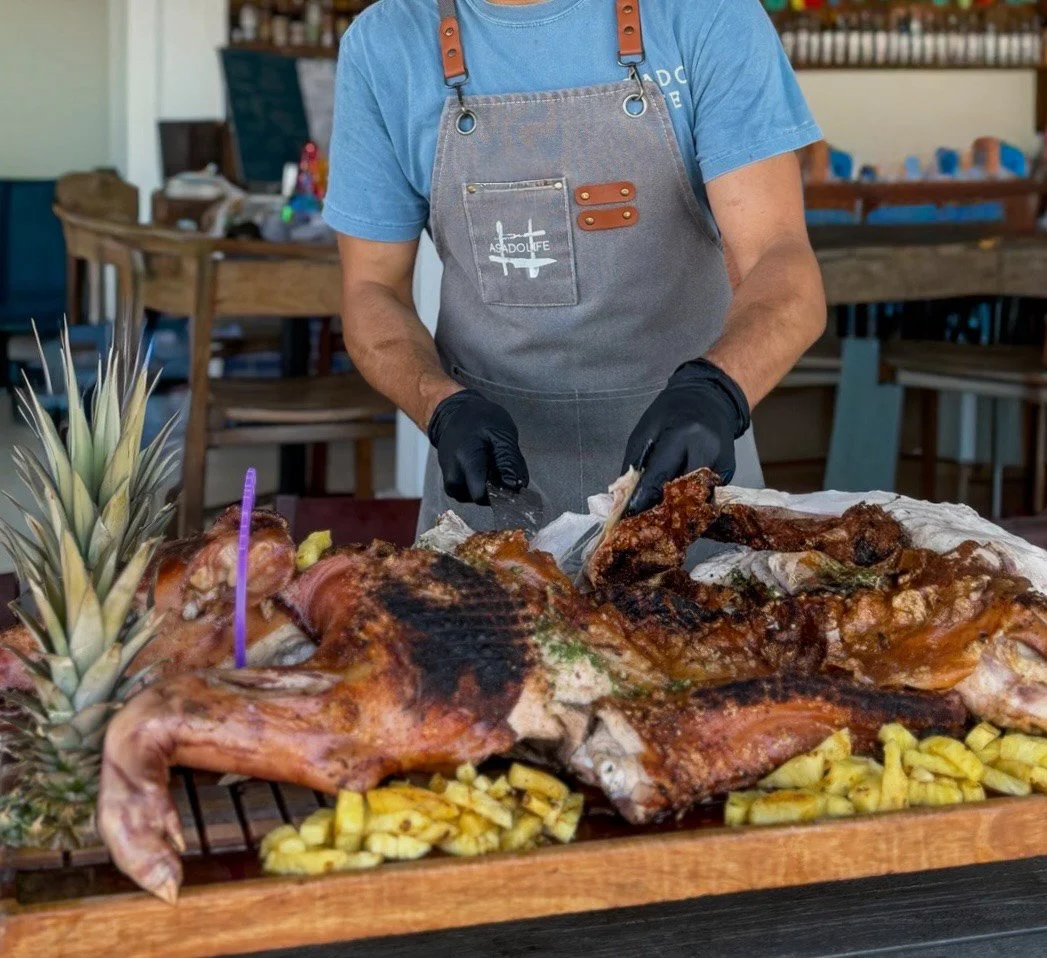
A whole pig is naturally a centerpiece meant to be carved, shared, and enjoyed with a crowd.
It's the small steps before the pig ever reaches the fire, followed by hours of cooking over live fire, that create the final result: slow-rendered meat, crisp skin, and a centerpiece that brings the live-fire cooking process directly to the table.
Want to Host Your Own Gaucho?
A whole pig is available through the catering menu, bringing the live-fire experience to your next gathering. Visit the Private Events tab to learn more about hosting your event!