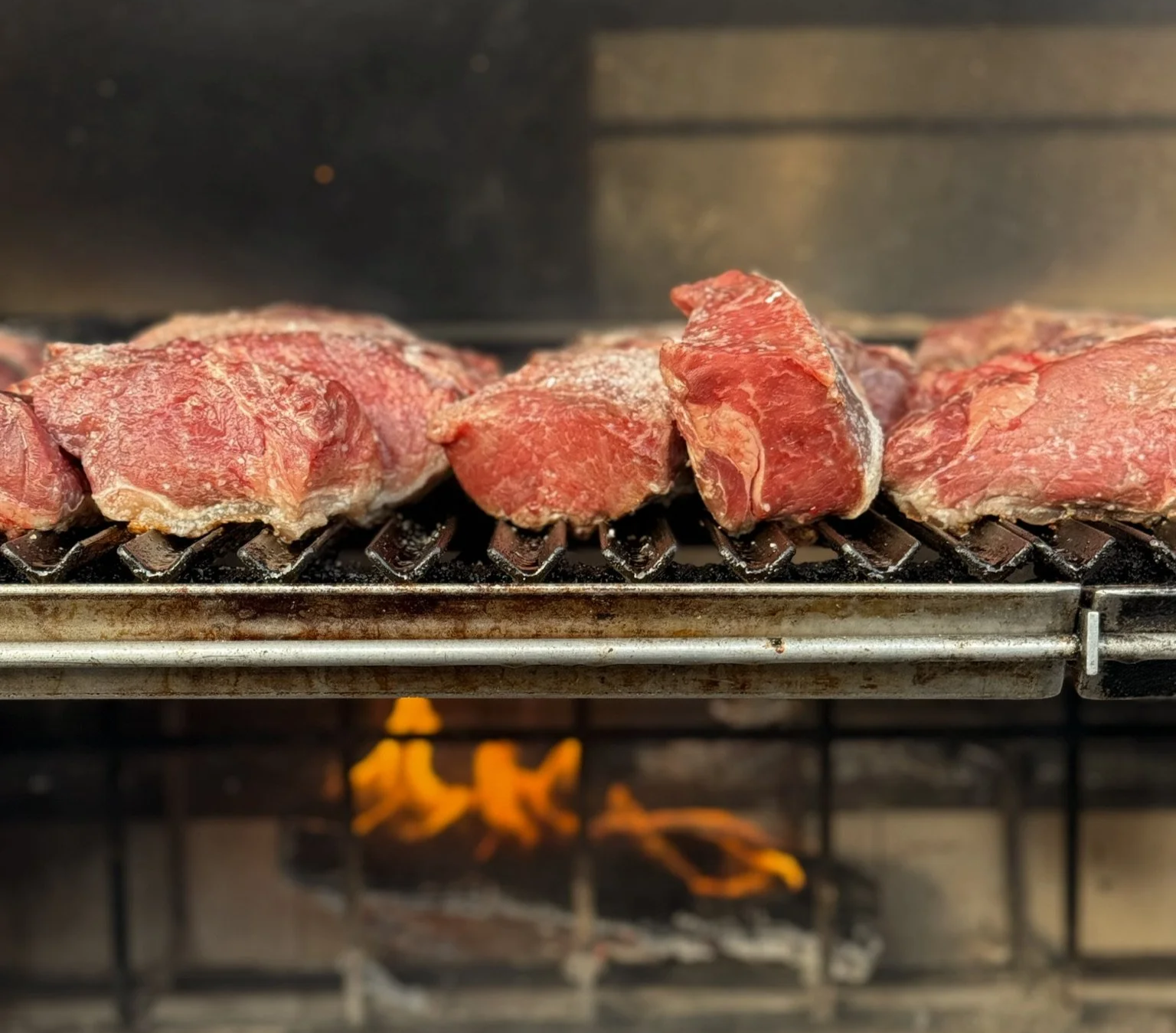
At the heart of a great picanha is the fat cap. This prized cut, also known as the top sirloin cap, is recognized for its triangular shape, lean and tender meat, and distinctive layer of fat that contributes richness as it cooks. Picanha is a staple of live-fire cooking.
At Asado Life, preparing picanha is about understanding the cut, working with the fire, and making the most of every ingredient.
The Role of the Fat Cap
As picanha cooks over an open flame, the fat cap slowly renders, releasing tallow that contributes richness and savory flavor. Some fat melts away, while some remains to develop a browned exterior. Preserving the right amount of fat is essential to achieving the balance of flavor and texture that makes this cut unique.
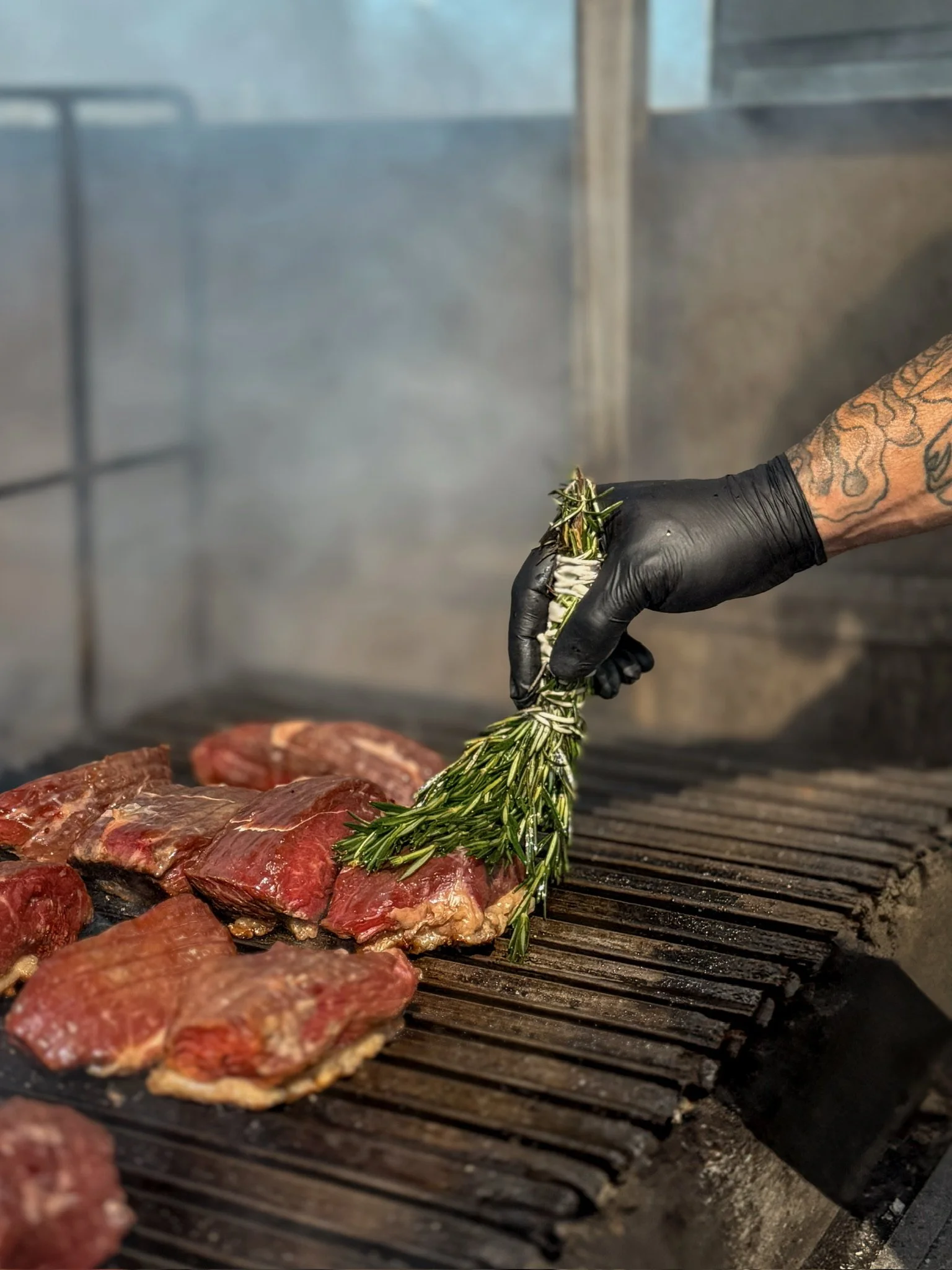
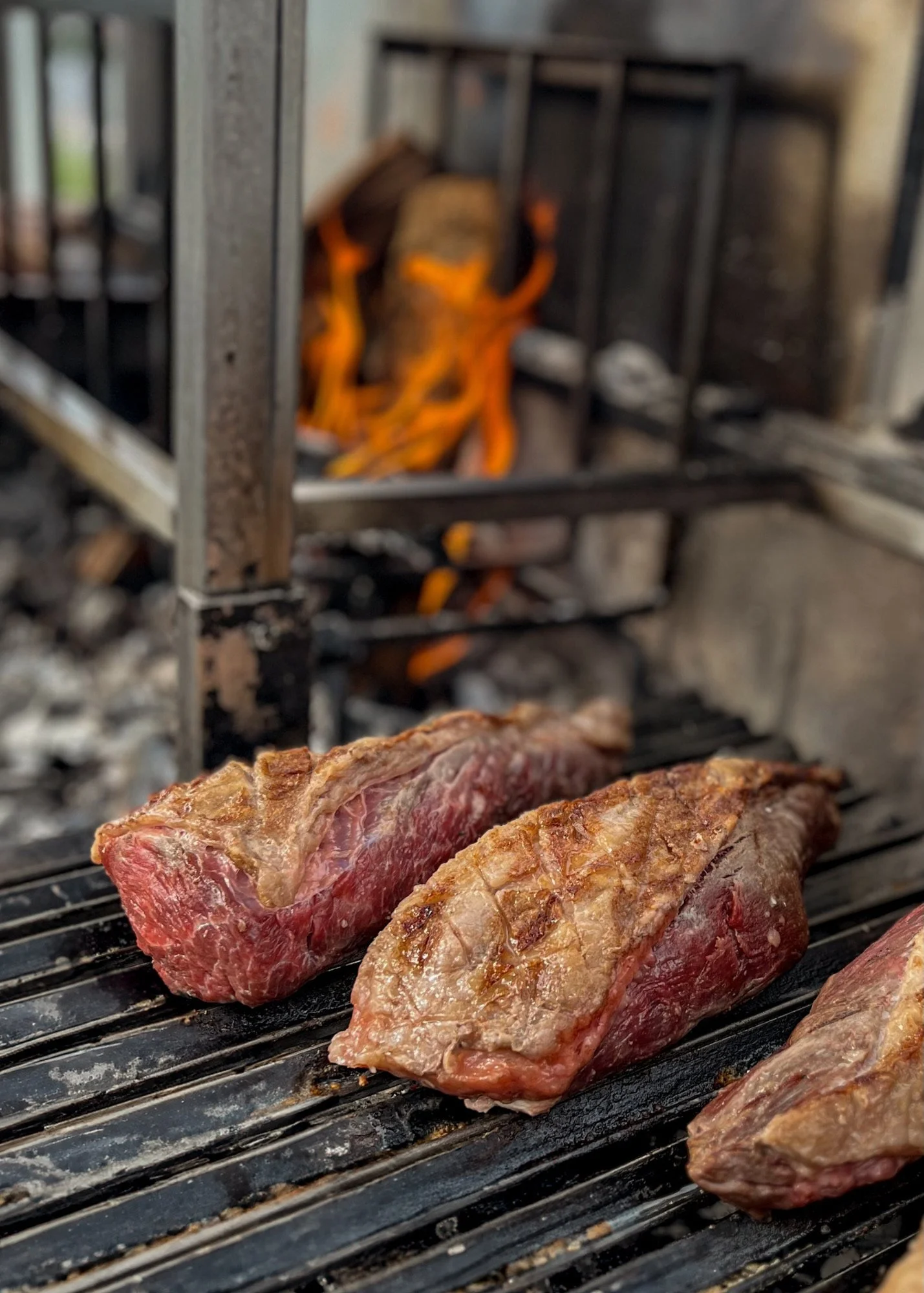
At Asado Life, the rendered tallow has another purpose. As it melts, it travels through our parrilla's signature V-grates, where we collect it for full utilization. We use the tallow to baste the picanha as it cooks, reintroducing fat and flavor released during the grilling process.
Working With the Fire
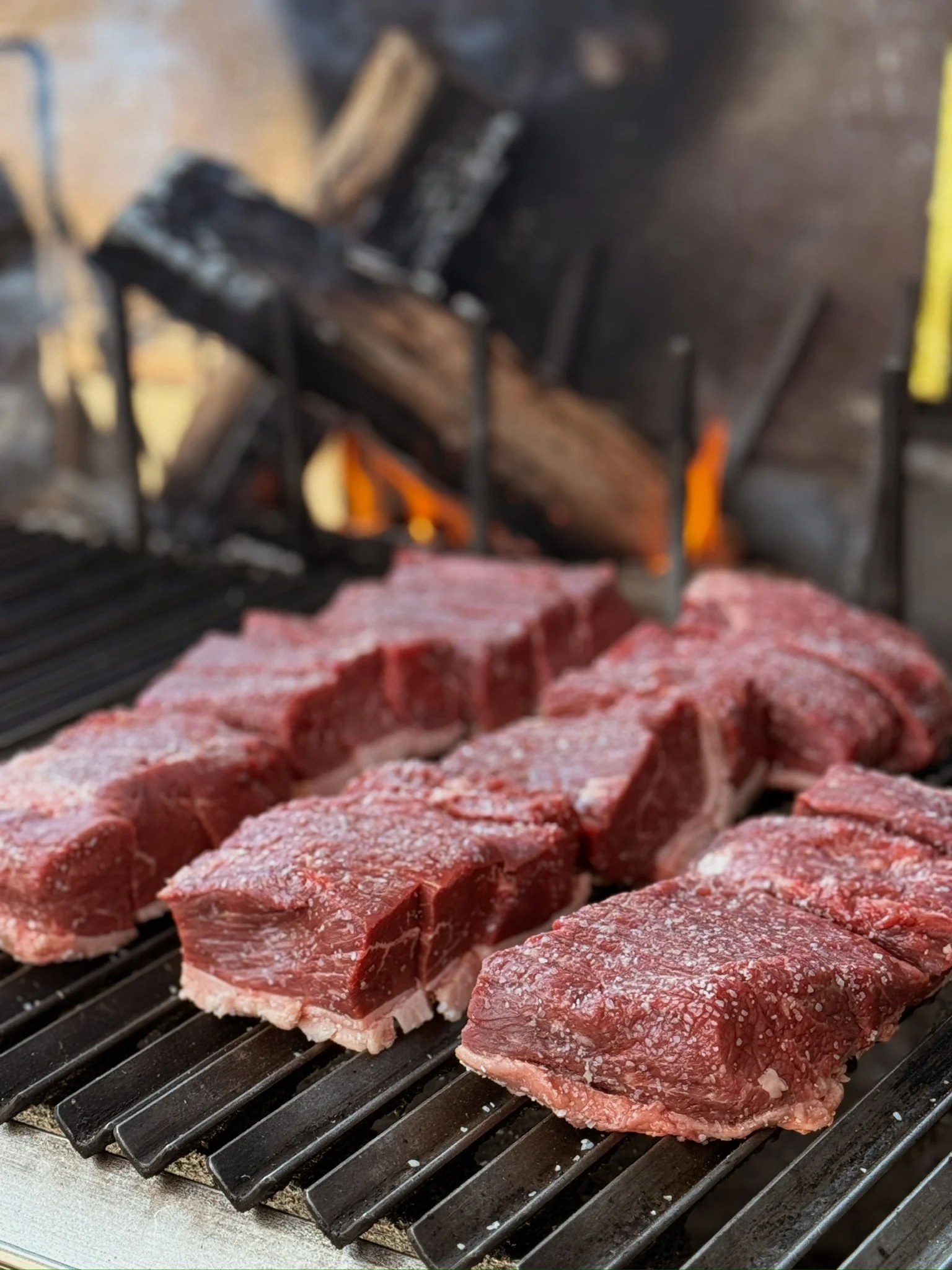
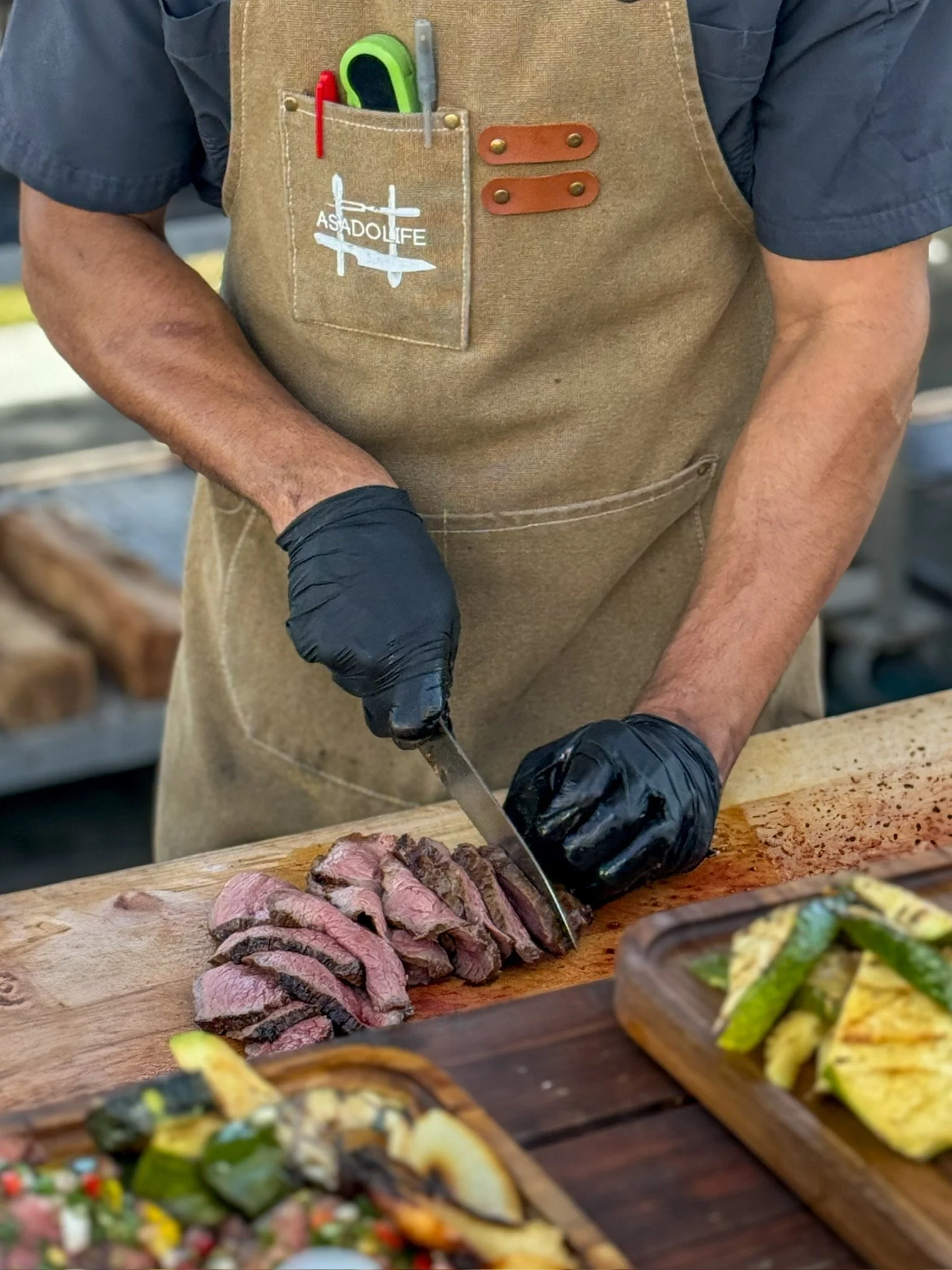
Cooking over a parrilla requires attention to the changing intensity of the fire and the position of the meat. The goal is to allow the fat to render gradually while developing a flavorful exterior and preserving the tenderness of the beef.
Every step serves a purpose: the fire develops the exterior, the grates direct the rendered fat, and the collected tallow returns to the meat.
From the Grill to the Plate
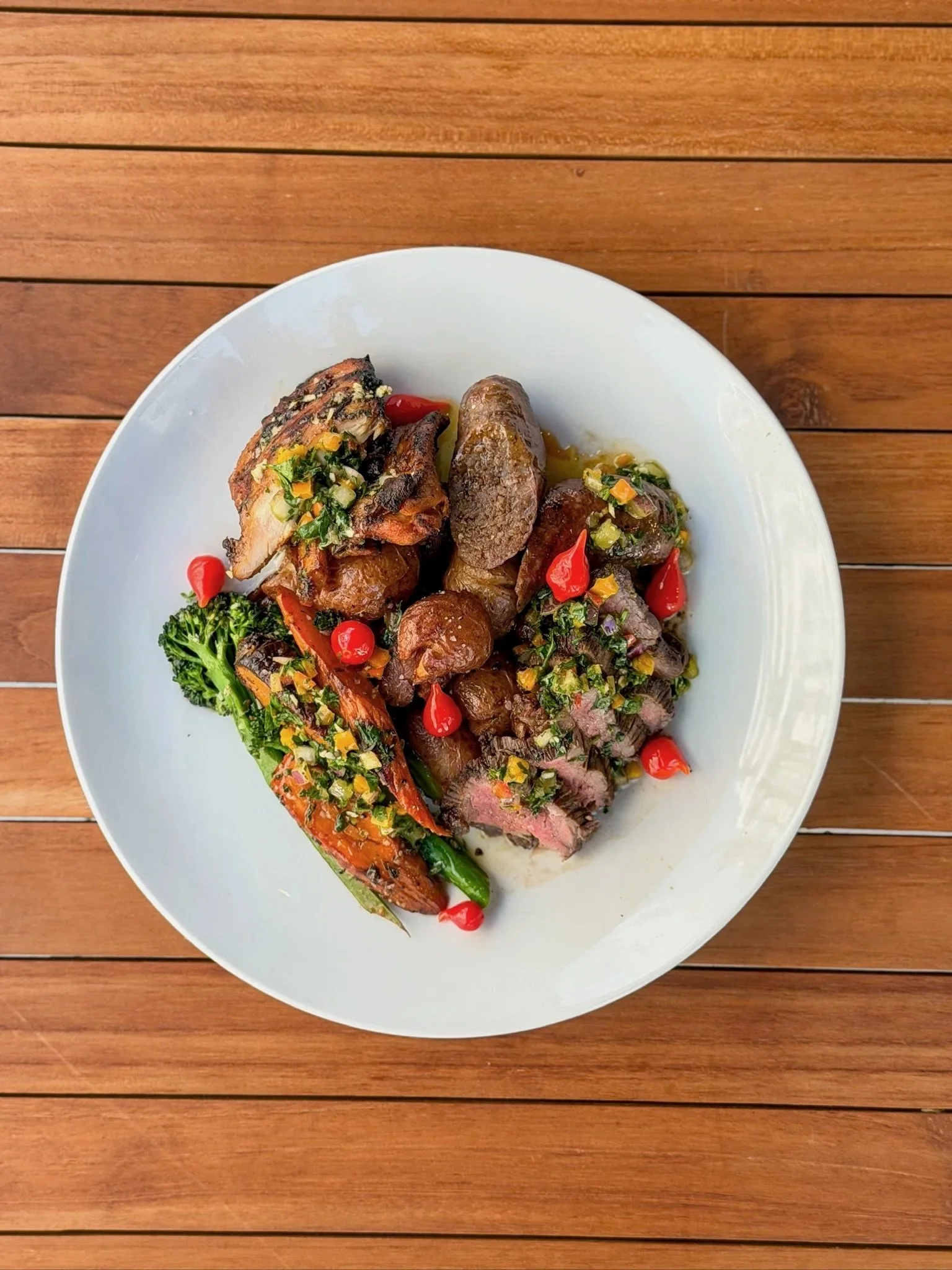
Experience our approach to picanha in the Asado Trio, available on our lunch and dinner menus in St. Augustine and Jacksonville. Paired with signature-spiced chicken thigh, house-made Malbec-infused chorizo, chimichurri, and crispy gaucho potatoes, the dish brings together three distinct preparations over the fire!